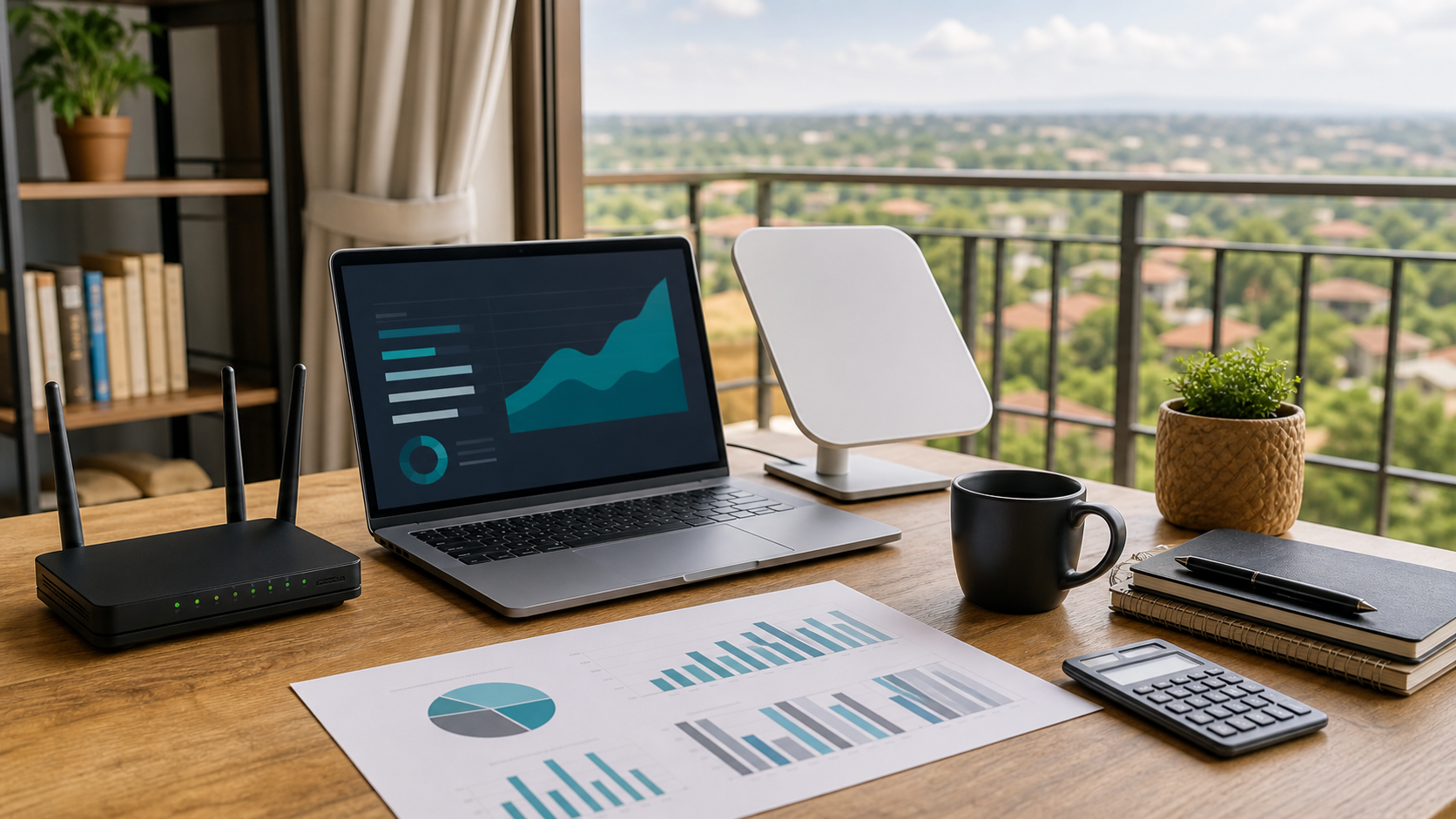
Amazon LEO Internet Prices in Kenya are one of the biggest questions for customers comparing satellite internet, fiber, 5G, and business backup links. Amazon Leo, previously known as Project Kuiper, is Amazon's low Earth orbit satellite internet network. It is expected to compete in the same practical space as other satellite broadband options, but official Kenya retail prices, monthly plans, installation fees, and local hardware pricing should be treated as pending until they are published through authorized channels.
This guide explains how to think about Amazon Leo pricing in Kenya without relying on fake numbers. It covers the likely cost components, what may affect the monthly fee, how home pricing may differ from business pricing, and how to compare the total cost before ordering. For package selection, read the internal guide to Amazon LEO Internet Packages in Kenya. You can also follow updates from Amazon Internet Kenya, installation support from Satellite Internet Installers, a local overview of Amazon LEO Internet Kenya, package commentary from Amazon LEO Internet Packages, and comparison guidance on how to compare Starlink with Amazon LEO.
Are Amazon LEO Internet Prices Available in Kenya?
As of now, confirmed Amazon Leo prices for Kenya should not be assumed unless they come from an official or authorized local source. The service rollout, licensing, distribution, hardware availability, tax treatment, support model, and commercial launch plan can all affect the final retail cost. That means any fixed Kenya price published before official availability should be treated as an estimate, not a guaranteed offer.
The smarter approach is to understand the pricing structure. A customer will likely need to consider equipment cost, installation cost, monthly service cost, delivery or activation charges, optional networking equipment, backup power, and support. For businesses, there may also be costs for failover routers, managed Wi-Fi, security configuration, or enterprise-grade service planning.
Main Cost Components
Amazon LEO internet pricing in Kenya will likely be shaped by more than one line item. A low monthly price can still be expensive if the hardware and installation costs are high. A higher monthly plan can be better value if it supports more users, stronger speeds, and reliable business operations. Buyers should compare the full first-year cost rather than only the advertised monthly fee.
| Cost item | What it covers | Why it matters |
|---|---|---|
| Hardware | Customer terminal, mount, router, cables, and related equipment | This is often the largest upfront cost for satellite internet |
| Installation | Site survey, mounting, alignment, cabling, router setup, and testing | Poor installation can reduce performance even on a good package |
| Monthly service | The active internet plan for home, business, remote site, or enterprise use | This determines recurring affordability |
| Network extras | Mesh Wi-Fi, access points, failover router, surge protection, or backup power | These extras may be necessary for larger homes or businesses |
| Support | Ongoing help, troubleshooting, relocation, maintenance, and business support | Support quality matters when the connection is mission-critical |
Expected Home Pricing Factors
Home customers usually care about monthly affordability, video streaming, online learning, remote work, family device usage, and simple installation. A household in Nairobi's outskirts, a rural home, a farm, or a holiday property may choose Amazon Leo because fiber is not available or mobile data is inconsistent. For that customer, the right price is the one that balances speed, stability, and a manageable monthly bill.
Home pricing may vary by terminal type, plan speed, data policy, router setup, and whether professional installation is included. A small home with a few devices may not need the same package as a large maisonette with smart TVs, laptops, phones, CCTV, and guest devices. The cost of indoor Wi-Fi should also be considered, because a strong satellite link can still feel weak if the router cannot cover the whole house.

Expected Business Pricing Factors
Business pricing should be evaluated by the value of uptime. A shop, clinic, office, lodge, cyber cafe, logistics site, or restaurant can lose sales and productivity when internet fails. In those cases, Amazon Leo may be used as the main connection in underserved areas or as a backup link alongside fiber or fixed wireless.
Business users should budget for more than the standard monthly fee. They may need a stronger router, staff and guest Wi-Fi separation, payment system reliability, firewall setup, cloud application performance, and failover routing. A business plan that looks expensive on paper can be worthwhile if it prevents downtime during payment processing, reservations, online orders, or customer communication.
Remote Site and Rural Pricing
Remote locations often have a different cost logic. A rural school, clinic, farm, NGO field office, construction camp, conservancy, or lodge may pay more upfront because the alternative is no dependable internet at all. In those places, the value of connectivity includes education, health coordination, security, operations, reporting, guest service, and emergency communication.
Remote sites should include installation complexity in the budget. Mounting height, cable distance, safe roof access, power quality, lightning risk, equipment protection, and router coverage can all affect the total cost. If the site has unreliable electricity, backup power should be planned at the same time as the internet installation.

Hardware Price and Terminal Choice
Amazon's Leo hardware strategy includes different terminal classes for different needs. Smaller terminals are aimed at lighter use, standard terminals serve normal home and business requirements, and higher-capacity terminals target demanding enterprise use. Kenya prices may therefore depend on which terminal is available and appropriate for the customer.
Do not choose hardware only by the lowest upfront price. A cheaper setup that struggles with the number of users can become expensive through poor performance, repeated support calls, and early upgrades. On the other hand, a household should not pay for enterprise-level equipment if ordinary use is the real requirement. Match the terminal to the actual site.
Installation Price and Site Readiness
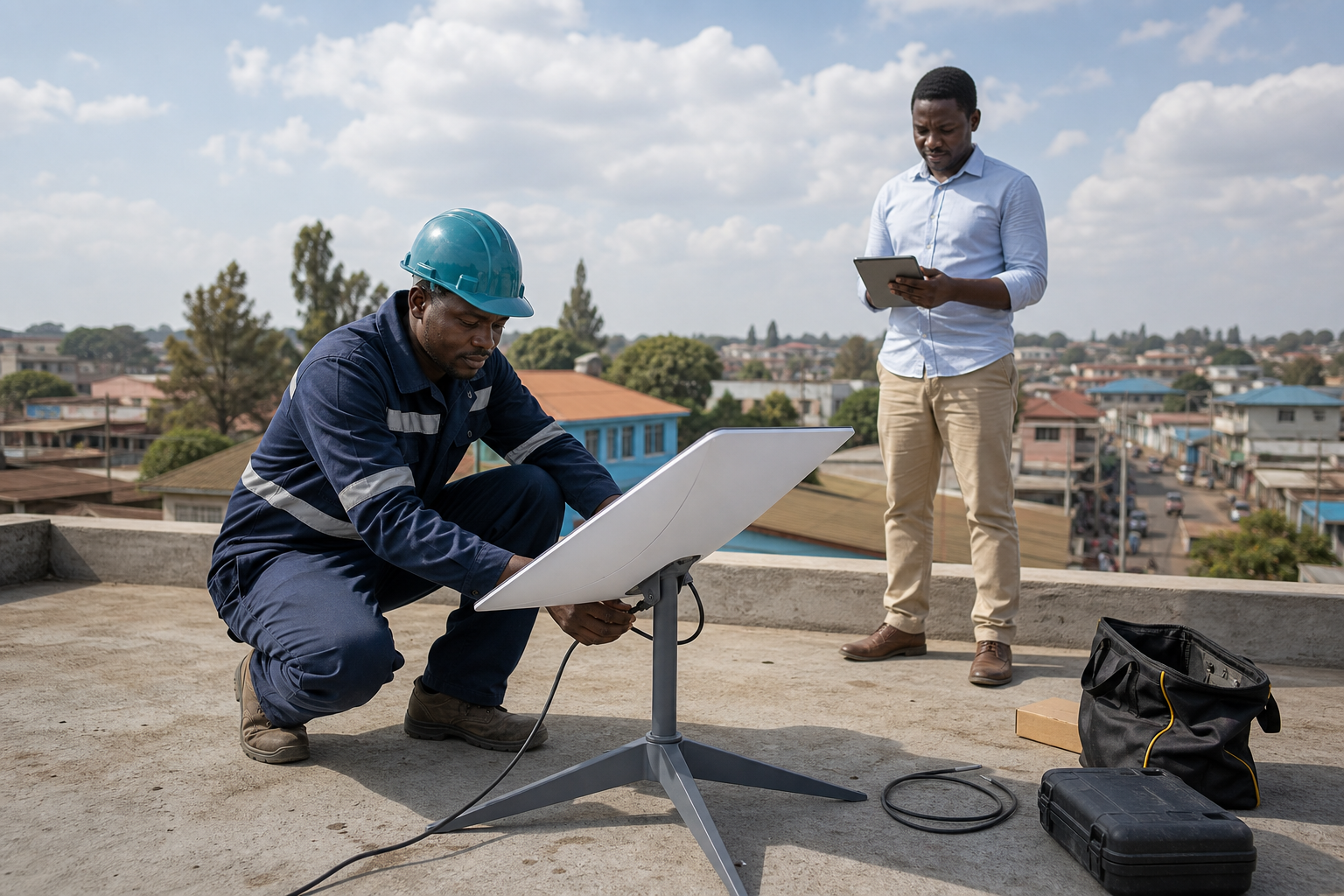
Installation pricing can vary because properties are different. A simple home installation with easy roof access and short cable runs is not the same as a commercial building, remote lodge, tall mast, or site requiring extra cabling and network equipment. Customers should ask what is included before comparing installation quotes.
A useful installation quote should explain mounting, cabling, router placement, testing, travel, accessories, and after-installation support. If the installer needs to add poles, brackets, conduits, surge protection, access points, or backup power equipment, those should be shown separately. Clear pricing avoids confusion later.
Monthly Price vs First-Year Cost
The monthly price is only part of the decision. A better comparison is first-year cost: equipment plus installation plus twelve months of service plus any required network extras. This shows the real budget impact and makes it easier to compare Amazon Leo with fiber, 5G routers, Starlink, or fixed wireless.
For example, a plan with a higher monthly fee but lower equipment cost may be easier to start. Another plan with higher upfront cost but strong performance may be better for a business. A rural facility may accept a higher first-year cost because the connection solves a problem that cheaper options cannot solve.
How to Compare Amazon LEO Prices With Starlink and Fiber
When comparing Amazon Leo with Starlink, fiber, 5G, or fixed wireless, compare the use case first. Fiber can be excellent where it is available and stable. 5G can be convenient where signal and tower capacity are strong. Satellite internet becomes valuable when terrestrial networks are unavailable, congested, expensive to extend, or unreliable.
Price comparison should include speed, latency, data policy, reliability, installation quality, support, equipment ownership, contract terms, and the cost of downtime. A cheaper connection that fails during work hours can be more expensive than a stable connection with a higher monthly fee.
Questions to Ask Before Paying
- Is the quoted Kenya price official, estimated, or promotional?
- Does the price include hardware, installation, activation, and taxes?
- Which terminal and router are included?
- What monthly plan is being quoted, and who is it designed for?
- Is there a data policy, fair-use policy, or speed management rule?
- What support is available after installation?
- Can the service be moved to another site if the customer relocates?
- What extra equipment is needed for full Wi-Fi coverage?
Final Thoughts
Amazon LEO Internet Prices in Kenya should be judged by total value, not only by the lowest advertised number. The real cost includes hardware, installation, monthly service, network extras, power readiness, and support. Until official Kenya prices are published, buyers should treat fixed figures carefully and focus on preparing a realistic budget.
The best next step is to identify the intended use: home, business, remote site, or enterprise. Then compare the package, installation plan, and first-year cost. Customers who do that will be better prepared when Amazon Leo pricing and availability become clearer in Kenya.