
Amazon LEO Internet Packages in Kenya are becoming a serious topic for homes, SMEs, schools, clinics, farms, lodges, and remote sites that need fast internet where fiber and mobile broadband are weak or unavailable. Amazon Leo, previously known as Project Kuiper, is Amazon's low Earth orbit satellite broadband network. It is designed to connect users through compact customer terminals, a large satellite constellation, and ground infrastructure linked to the wider internet.
For Kenyan customers, the most useful way to think about Amazon Leo is not only as a single internet product, but as a set of expected package categories. The right choice will depend on location, number of users, daily data needs, installation environment, power stability, support expectations, and whether the connection is for home use, business continuity, public services, or enterprise operations. You can follow local updates from Amazon Internet Kenya, compare setup support from Satellite Internet Installers, and review a broader local guide to Amazon LEO Internet Kenya.

What Amazon LEO Internet Means for Kenya
LEO stands for low Earth orbit. Instead of relying only on underground fiber, fixed wireless towers, or older high-orbit satellite systems, Amazon Leo uses satellites that orbit much closer to Earth. That shorter distance can reduce latency and make satellite internet practical for video calls, cloud applications, online learning, streaming, point-of-sale systems, remote monitoring, and business communication.
Amazon has positioned Leo as a network for people and organizations beyond the reach of dependable existing connectivity. Its official hardware lineup includes three terminal classes: Leo Nano for lighter needs, Leo Pro for standard home and business use, and Leo Ultra for high-capacity enterprise requirements. That hardware direction is important for Kenya because connectivity needs vary sharply between a Nairobi home office, a rural school, a lodge in a wildlife conservancy, a construction site, and a county-level operation.
Expected Amazon LEO Internet Package Types
Final Kenya retail pricing and official local plan names will depend on Amazon Leo's commercial rollout, licensing, distribution, and local support arrangements. Even before exact local pricing is confirmed, customers can prepare by understanding the package categories that are likely to matter.
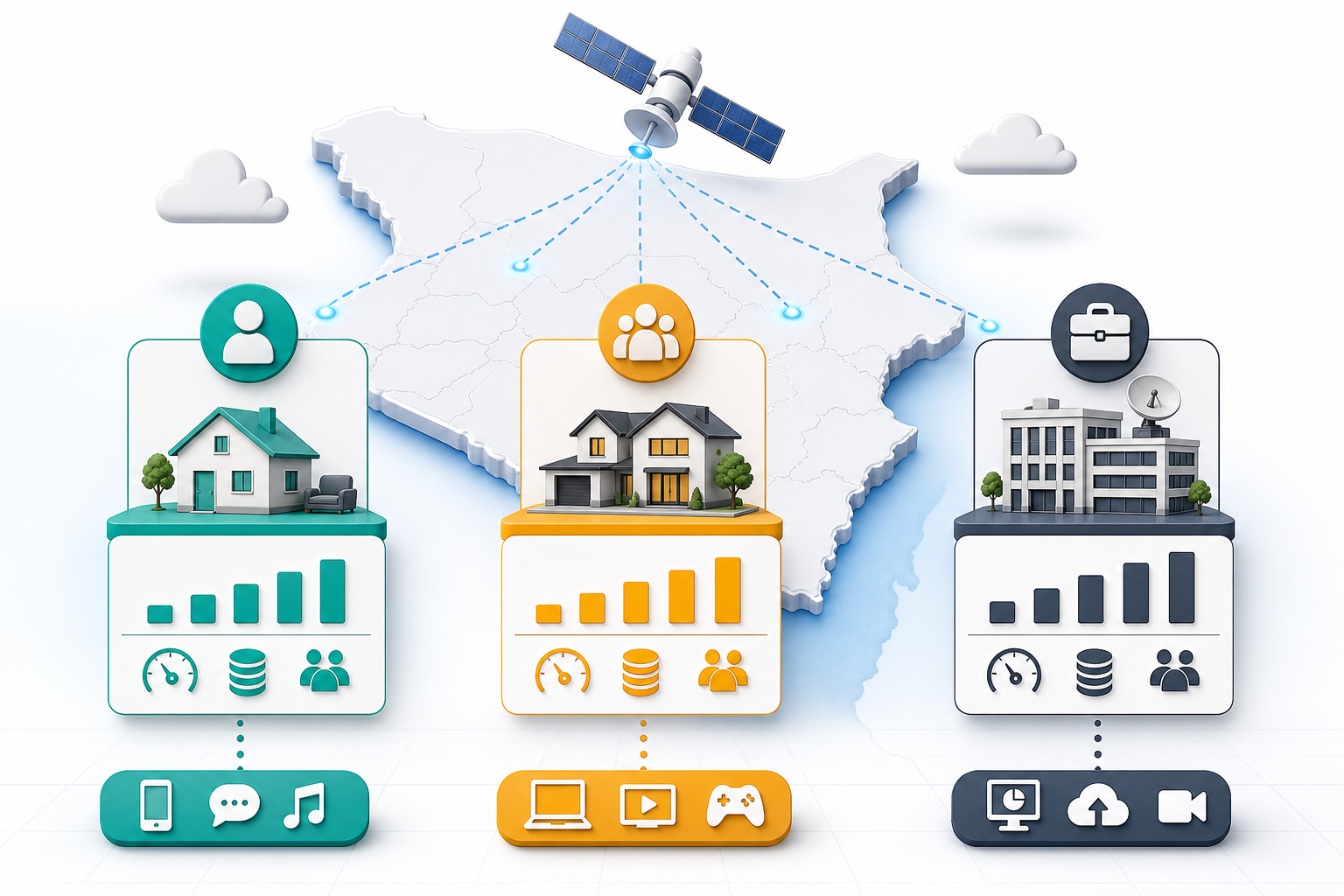
| Package category | Best fit | Typical priority |
|---|---|---|
| Home package | Families, home offices, streaming, school work, and general browsing | Stable speed, simple installation, predictable monthly cost |
| Small business package | Shops, offices, clinics, cyber cafes, restaurants, and lodges | Reliable uptime, multiple users, payment systems, cloud tools |
| Remote site package | Farms, construction sites, NGOs, field teams, schools, and rural facilities | Coverage beyond fiber, rugged setup, practical support |
| Enterprise package | Large organizations, high-bandwidth sites, backup links, and mission-critical operations | Higher capacity, stronger service planning, network integration |
Customers comparing expected options can also read the local package-focused article at Amazon LEO Internet Packages. For buyers deciding between satellite options, this guide on how to compare Starlink with Amazon LEO is a useful reference point.
Home Packages for Streaming, Study, and Remote Work
A home package should serve everyday household needs without forcing the customer into enterprise-level complexity. In Kenya, that may include smart TVs, phones, laptops, tablets, online classes, video meetings, WhatsApp calls, YouTube, cloud backups, and basic smart-home devices. The main concerns are monthly affordability, clear installation, stable Wi-Fi inside the house, and practical customer support.
Homes outside strong fiber zones could benefit most. Examples include peri-urban estates, rural homes, farms, holiday homes, and areas where mobile broadband slows down during peak hours. The important planning question is not only the satellite link itself, but also the indoor Wi-Fi layout. A strong terminal connection can still feel poor if the router is placed badly or the house needs mesh coverage.
Business Packages for SMEs and Customer-Facing Work
For Kenyan SMEs, internet downtime quickly becomes a business problem. Shops need payment systems, offices need email and cloud files, clinics need digital records, restaurants need delivery apps, and lodges need guest Wi-Fi. A business package should focus on uptime, router quality, multi-user stability, network security, and support response.
Satellite internet can also work as a backup link. A business with fiber can still use Amazon Leo as redundancy for outages, roadworks, cable cuts, and tower congestion. In that setup, the package decision should include failover equipment, router configuration, usage policy, and whether guest Wi-Fi is separated from internal systems.
Remote Site Packages for Schools, Farms, Clinics, and Field Teams
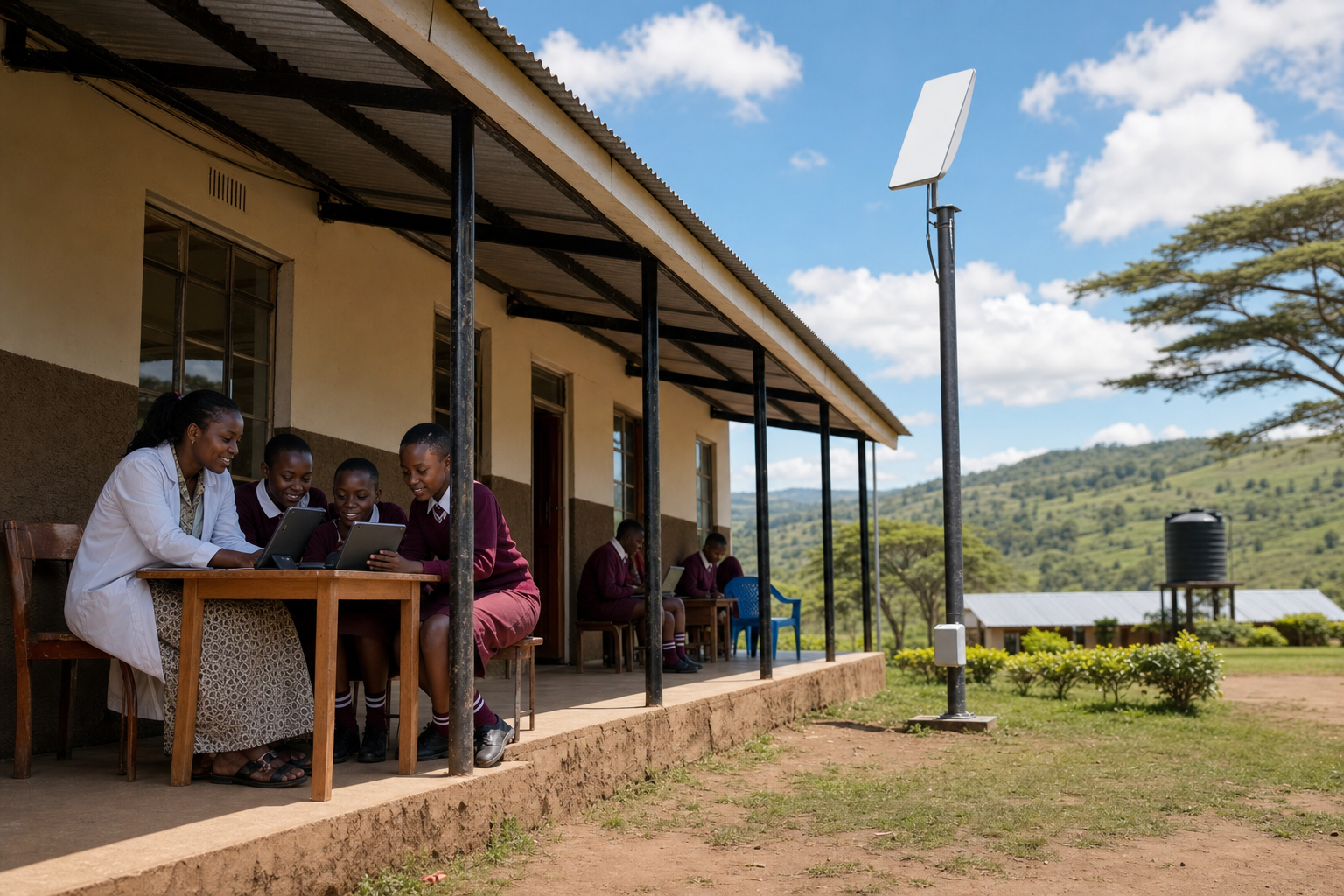
Remote sites are where LEO satellite internet can make the biggest practical difference. A school can support digital learning, a clinic can improve communication and telemedicine, a farm can use weather data and monitoring tools, and a field office can report work without waiting to travel back to a town with better connectivity.
These locations need more than a dish and a router. They need proper mounting, cable protection, power planning, lightning awareness, router security, and user management. If power is unreliable, the internet package should be planned together with backup power. If many people will connect at once, the site may need access points, bandwidth rules, and a clear device policy.
Enterprise Packages and High-Capacity Use
Enterprise customers should evaluate Amazon Leo differently from a normal household. The decision may involve service-level expectations, multiple branches, private networking, cloud access, backup connectivity, firewall requirements, monitoring, installation documentation, and integration with existing IT systems.
Amazon's Leo Ultra terminal class is positioned for high-capacity use, while smaller terminals target lighter and standard needs. In Kenya, this could matter for logistics companies, county projects, remote industrial sites, hospitality groups, large farms, media teams, and organizations that need reliable connectivity outside the strongest terrestrial networks.
Installation Requirements in Kenya
Installation quality will affect the customer experience as much as the package itself. The terminal needs a clear view of the sky, a secure mounting point, neat cabling, safe power, and a router placement plan that serves the actual building. For homes, that may be a roof, wall, pole, or open compound location. For businesses, it may require permission from a landlord, building manager, estate office, or site supervisor.
Customers should prepare the location before installation by checking roof access, power sockets, cable routes, Wi-Fi dead zones, and the number of users. Where the connection is business-critical, it is worth documenting the installation and keeping router credentials, support contacts, and package details in a safe place.
How to Choose the Right Amazon LEO Package
Start with the real use case. A family that streams and works from home has different needs from a lodge with guest Wi-Fi, a school computer lab, or a construction site. Count users and devices honestly. A package that works for five devices may struggle with forty. Think about whether the connection is primary internet, backup internet, or a temporary project link.
- Choose a home-focused option for normal household browsing, learning, entertainment, and remote work.
- Choose a business-focused option when uptime, payments, cloud tools, and multiple staff users matter.
- Choose a remote-site setup when there is no reliable fiber or mobile broadband and the installation environment is demanding.
- Choose an enterprise plan when capacity, monitoring, security, and integration are more important than the lowest monthly cost.
Amazon LEO vs Fiber, 5G, and Starlink
Fiber is still excellent where it is available, affordable, and stable. 5G and 4G can be convenient where signal quality and tower capacity are strong. Amazon Leo becomes attractive where terrestrial networks are missing, overloaded, expensive to extend, or unreliable. Compared with other satellite options, Amazon Leo's value will depend on Kenya pricing, support, terminal availability, coverage capacity, and how quickly the network scales.
The best choice may also be a combination. A business can keep fiber as the main line and use Amazon Leo for backup. A rural site can use Amazon Leo as the main connection and mobile data as emergency fallback. A home can use satellite internet where fiber has not reached, then reassess later if fiber arrives.
Final Thoughts
Amazon LEO Internet Packages in Kenya should be evaluated by use case, not hype. The strongest package is the one that fits the location, number of users, support needs, power situation, and budget. For many Kenyans outside reliable fiber and strong mobile broadband, LEO satellite internet could become a practical path to stable digital access.
As the rollout develops, keep checking Amazon Internet Kenya for local updates, installation guidance, and package information. Customers who plan early will be better prepared to choose the right equipment, installation approach, and monthly plan when Amazon Leo availability expands.